
The Rhythma Method™
Developed by Dr. Jessica E. Teich
The Rhythma Method™ is a structured, individualized approach that uses neurologic music therapy®-informed care designed to activate and integrate the sensory system, facilitate emotional and arousal regulation, and achieve the brain-body coordination to achieve functional engagement across environments. Without these foundational components, other areas of cognitive functioning, are not as easily accessible, including attention, communication, memory, and academic learning.
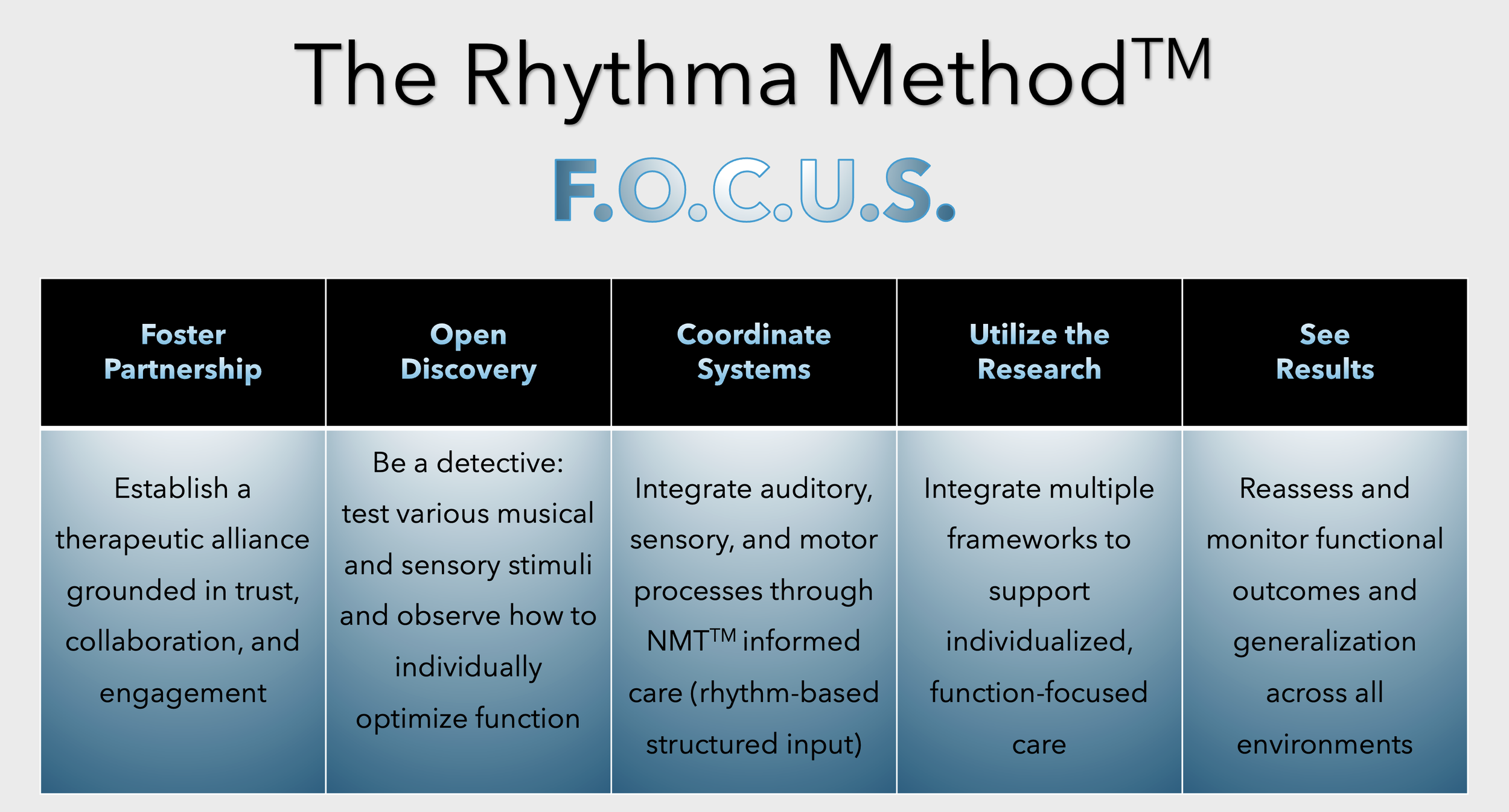
The method emphasizes the therapeutic alliance between the clinician and the client/family: partnership over perfection. At the centre of the The Rhythma Method™ is a clinical framework referred to as FOCUS, which guides the therapeutic process in a structured and responsive way.
Neuroscience-Informed Applications
Neurologic Music Therapy® (NMT™)
Rhythma Health Solutions™ provides individualized, rhythm-based intervention designed to support the foundational systems that make regulation, integration, coordination, and engagement possible.
Services are grounded in neurologic music therapy®, a specialized system of techniques that applies standardized, research-informed applications to address non-musical outcomes such as movement, attention, communication, and cognition.
Neurologic music therapy® is based on the neuroscience of how the brain processes rhythm, sound, and movement. Through structured auditory–motor input, rhythm is used to influence timing, coordination, and nervous system regulation. This allows intervention to directly target the systems that support engagement, learning, and daily functioning.
Care is structured yet responsive, with sessions guided by ongoing assessment and clinical reasoning. Interventions are adapted in real time based on each individual’s needs, with the goal of supporting meaningful, sustainable change that extends beyond the clinical setting into home, school, and community environments.