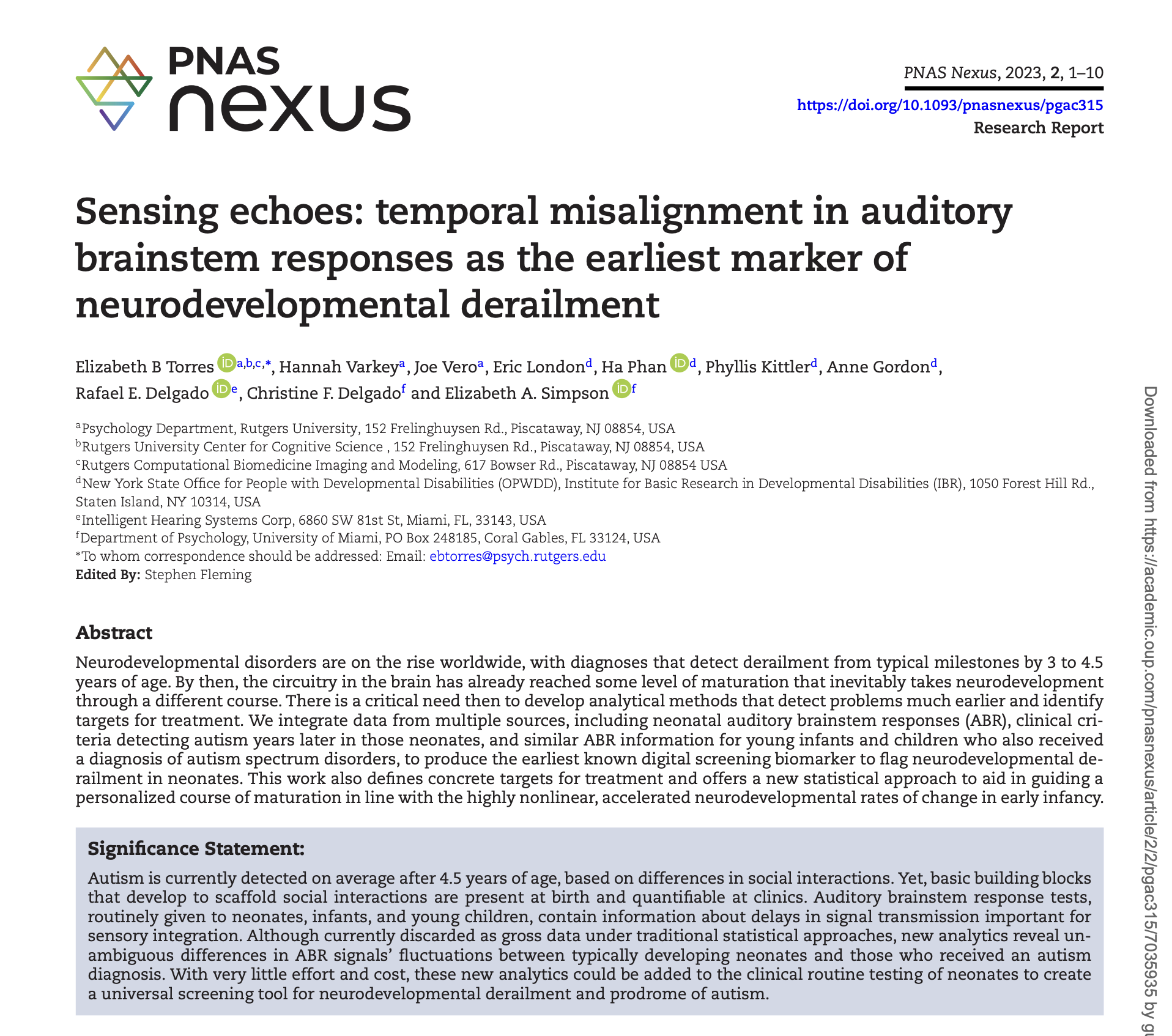
This study explores how early sound processing in the brain relates to development.
What it shows
This research shows that small differences in how the brain processes sound can be detected as early as birth.
Why it matters
Most developmental differences are identified later, often after challenges are already present. This study highlights that the foundations of development, like sensory processing and timing, begin much earlier.
How this connects to therapeutic outcomes
These early systems become the focus in a clinical setting, using specific types of auditory input, rhythm and timing-based strategies to support regulation, coordination, and functional development.
Sensing Echoes: Temporal Misalignment in Auditory Brainstem Responses